19/03/26
Using the Ultimate Playoff to Build Music Mastery
For many music teachers, there is a familiar challenge in the rehearsal room.
Students may be enthusiastic and eager to play, but foundational skills like note reading and rhythm recognition can slow everything down—and chip away at students’ confidence. When those fundamentals are shaky, teachers often spend precious rehearsal time helping kids get on track rather than focusing on repertoire performance.
For Susan Ogletree, a veteran music educator, this problem is one she has encountered many times while building music programs around the world. After three decades teaching in international schools—and years of using Breezin’ Thru Theory with students from Grades 6 through 12—she has learned that strong musical foundations make everything else possible.
Now in her first year at Georgetown International Academy in Guyana, a growing school that has doubled in size in recent years, Susan is once again helping shape a young music program. With that in mind, this year, she decided to try something a little different.
 Rather than assigning her usual mix of Breezin’ Thru theory drills and lessons, in January and February, Susan devoted the time to the Breezin’ Thru Ultimate Playoff, a month-long, high-energy challenge where students compete against peers around the world across five different music theory games.
On the surface, the game seems simple: play, repeat, improve your score. But each round presents randomized questions, so students can’t rely on memorization. Plus each game includes four progressively difficult levels, so success comes down to true mastery—perfect scores paired with the fastest possible response times. In many cases, leaderboard positions are decided by seconds, adding an extra layer of excitement, focus, and fun.
What started as a simple shift in approach quickly became a game changer. And, the results from her experiment surprised even her!
Why the Ultimate Playoff Works
For Susan, the decision to focus on the Ultimate Playoff came down to how well it aligned with the way she believes students learn best.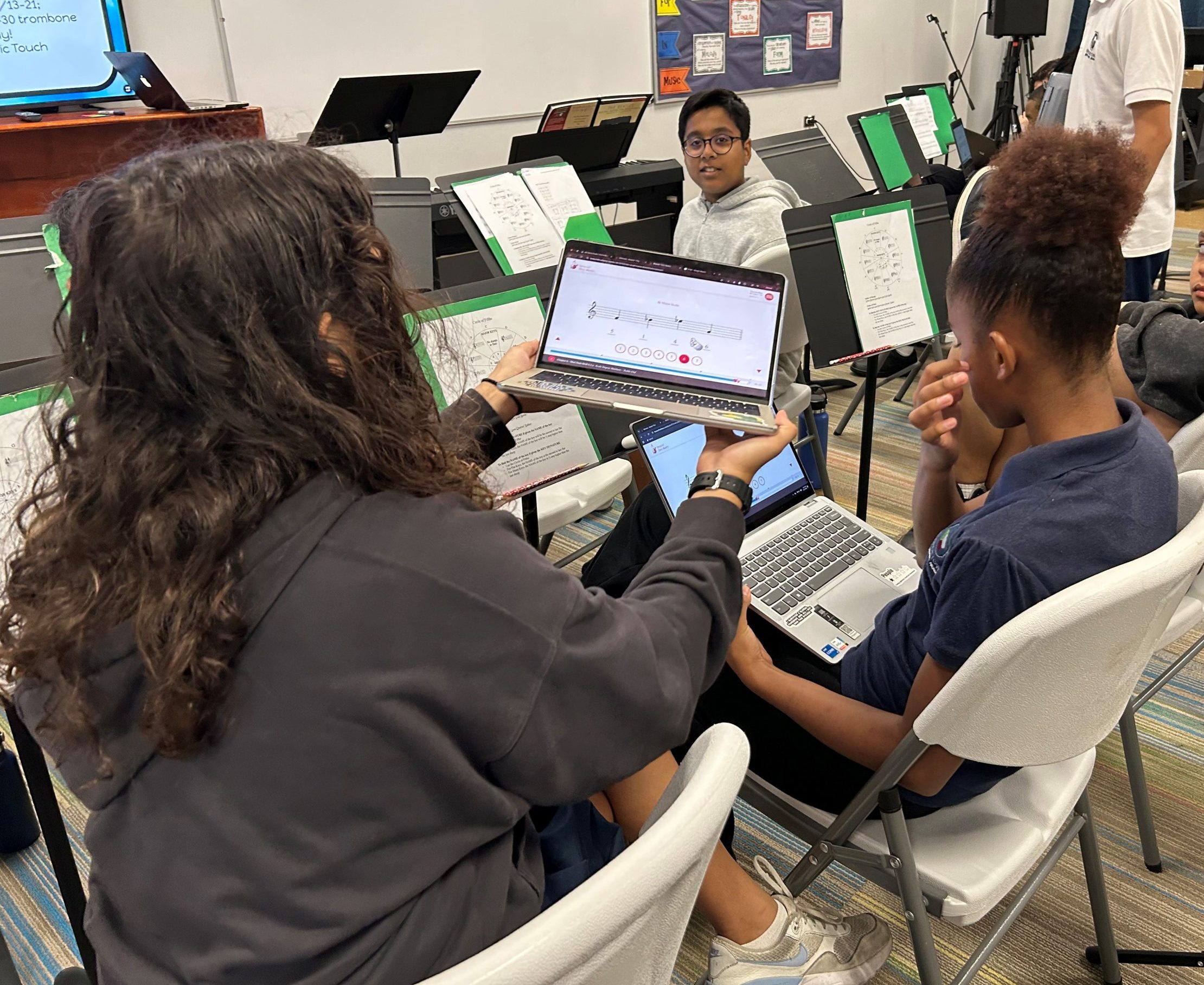
“With Breezin’ Thru Theory, I love the mastery approach where kids can move at their own pace,” Susan explains. “What I really liked about the Ultimate Playoff is the way it engages the kids. When I asked the students why they were so invested, they said it got easier and easier the more they played. They could see and hear their own improvement.”
Instead of limiting students to particular activities, Susan allowed students to revisit whichever games helped them most. The freedom to repeat exercises helped reinforce music theory and performance skills while building confidence.
“For some kids it was a nice step away from conquering new content,” she says. “They could focus on things they were already familiar with. As a teacher, I loved how the learning really became ingrained.”
From Theory to Performance
And the impact showed up quickly. The most immediate difference Susan noticed appeared in how quickly students could apply what they had learned.
Previously, she sometimes had to guide students through mnemonic systems such as FACE or “All Cows Eat Grass.” After the challenge, that kind of 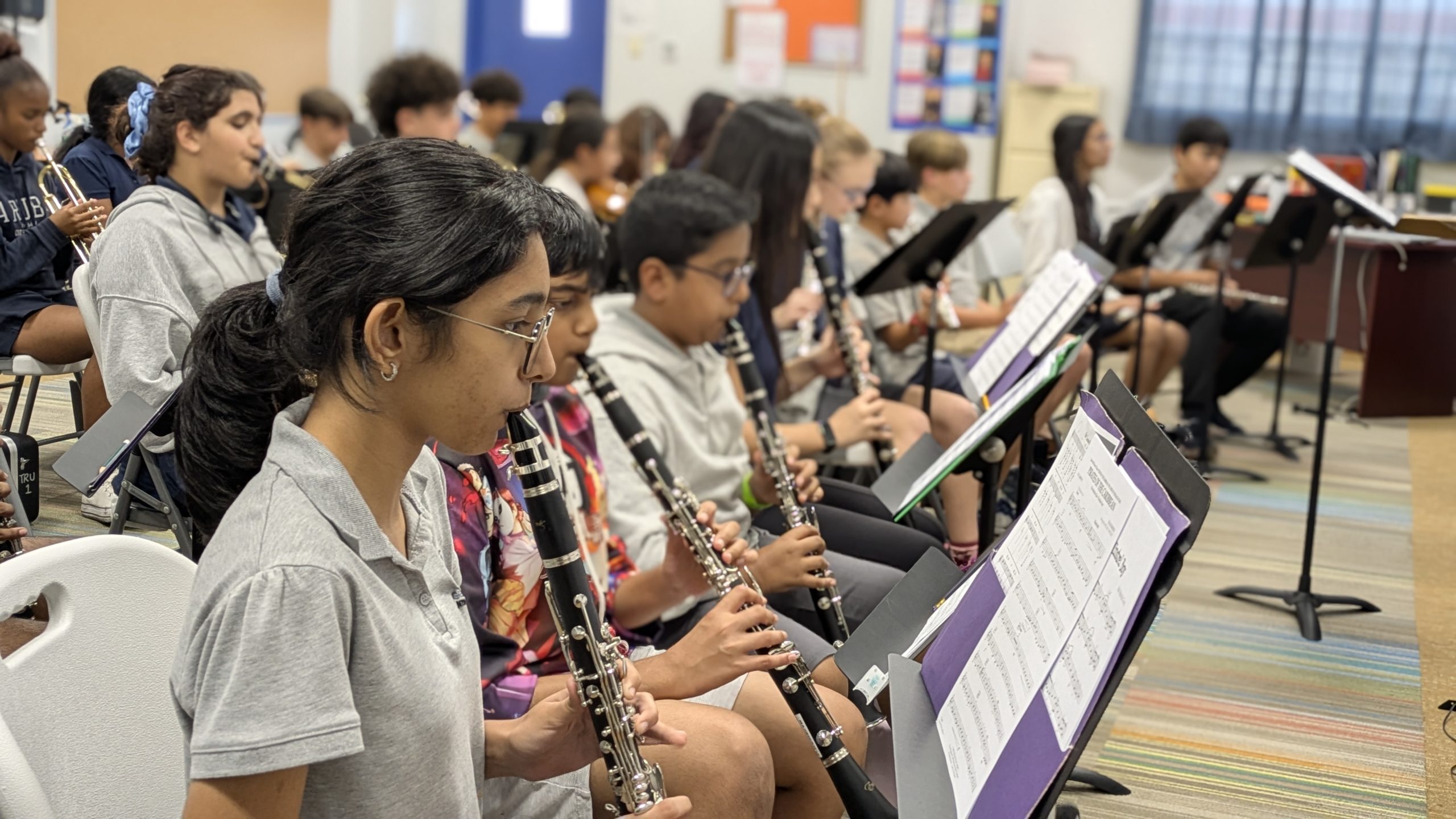 prompting became far less necessary. “It makes working on repertoire and preparing for concerts so much easier because I’m not coaching them through those steps,” states Susan.
By the time students reached more advanced material—such as Chapter 6 (Major Scales) concepts that require both note recognition and deeper theoretical understanding—the connection between gameplay and performance became clear. Students weren’t just learning concepts; they were applying them more quickly and confidently in real musical contexts.
One young student’s experience particularly stood out.
“She started halfway through last year and used to say she wasn’t sure about her note names, so she came in for extra help,” Susan explains. “After weeks of repeated gameplay, she returned with a new level of confidence. She told me, ‘You can put any note on the bass clef and I know exactly what it is!’”
For a music teacher, moments like that signal something important: the student has moved from guessing to knowing.
Rhythm Skills and Musical Confidence
The improvements weren’t limited to note reading. Susan also saw noticeable gains in rhythm comprehension through the Rhythm Rocks game, which aligns with specific theory chapters.
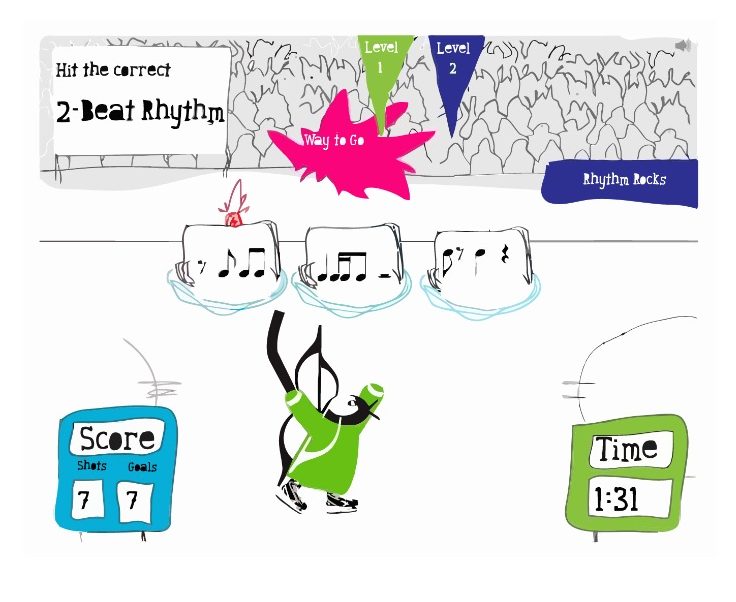 “My Grade Six students are in chapter five now, dealing with eighth notes and dotted quarter notes,” she says. “Rhythm Rocks helped. I liked that they had to get past one level to do two and three.”
Because the gameplay structure requires students to unlock increasingly difficult levels, they were motivated to keep practicing. (And the fun factor of the games helped too!) The repetition gradually made rhythm patterns more automatic. In other words, theory practice began translating directly into stronger performance skills.
Competition, Visibility, and Motivation
Another factor that energized students was the leaderboard. Every class began with a quick update on where they were as a school, and where they were in each game.
Seeing their school’s name appear on the board with other worldwide participants quickly became a source of pride. “The kids thrived on the challenge,” she notes. “They loved seeing their name up on the screen,” says Susan.
She awarded small prizes for each category winner, turning the challenge into a celebration of effort and achievement… and motivating the students to strive for better and better results.
In several cases, top student rankings came down to fractions of a second—highlighting just how focused students became on both accuracy and speed.
Real Results on the Leaderboard
Susan’s students didn’t just participate—they stood out.
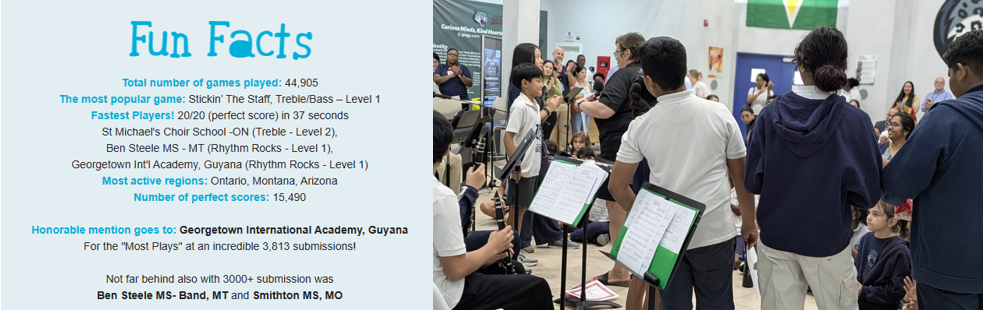
Over the course of the challenge, her students logged more than 3,800 plays, one of the highest participation rates among all schools. Their consistency and focus paid off, earning them leaderboard placements across multiple games.
Most notably, her students achieved first runner-up in Trippin’ Thru Triads, widely considered one of the most challenging games in the competition. Because the game tests both accuracy and speed under pressure, success requires not just understanding, but true fluency.
For Susan, that result was especially meaningful. It showed that students weren’t just improving—they were mastering one of the most demanding areas of music theory.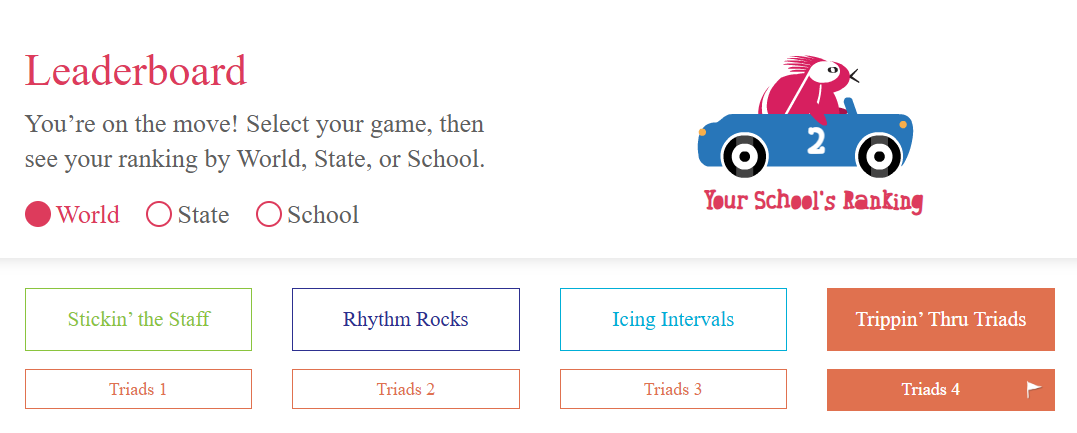
A Proud Moment for Students and Parents
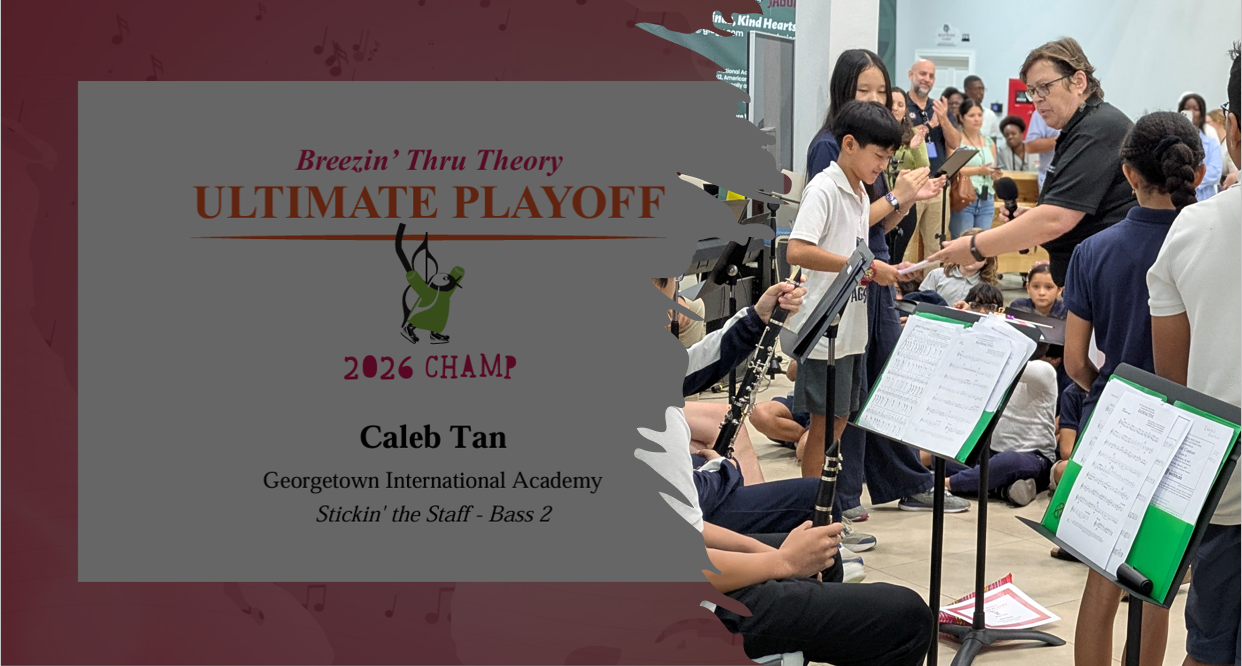
At the end of the challenge period, the recognition extended beyond the classroom. During a lunchtime school concert, Susan projected the email announcing Georgetown International Academy’s honourable mention placement.
“The parents were ecstatic,” she recalls. “They were clapping and cheering.”
For a young school still establishing its identity, seeing its name recognized publicly meant a great deal. Susan also handed out certificates to students who placed on the leaderboard. “It was so helpful,” she says. “I just clicked and had a certificate with each student’s name on it for the game they won.”
Those small moments of recognition helped reinforce the effort students had invested over the previous weeks.
Mastery Through Repetition
Looking back, Susan believes the success of the Ultimate Playoff came down to one key factor: repetition.
“It’s worth taking the time,” she says. “I never felt like I was taking away from what they do regularly because I integrate Breezin’ Thru Theory so much.”
In her classroom, theory work is already part of the curriculum.
“The Ultimate Playoff flowed as part of what we were doing. Every class we start with something from Breezin’ Thru Theory, usually five to ten minutes. Even if a teacher only does theory once a week, it’s still beneficial,” she adds. “It strengthens foundational skills.”

For Susan, the biggest takeaway is simple: when students truly master the fundamentals, everything else in music becomes easier.
The rehearsal room runs more smoothly. Students feel more confident. And teachers, like Susan, can spend more time doing what matters most: making music.